Dareechah-e-Nigaarish
Dareechah-e-Nigaarish
Toronto, ON
Canada
talat

Ahmad Rahi: Song Videos
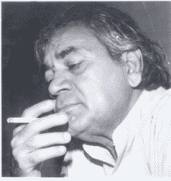 Ahmad Rahi (1923 – 2002)
Bio-Sketch of Modern Punjabi Poet Ahmad Rahi
Courtesy of Saeed Wasiq
سینکڑوں سدا بہارگیتوں کے خالق احمد راہی کا اصل نام غلام احمد تھا۔ وہ 12 نومبر1923ء کوبھارتی پنجاب کے شہر امرتسرمیں پیدا ہوئے۔ شاعری کا شوق اوائل عمری سے ہی تھا۔ سعادت حسن منٹو، ساحر لدھیانوی، ابن انشاء اور کرشن چندر جیسے دوستوں کی محفلوں نے راہی کی صلاحیّتوں کو اور بھی نکھار بخشا۔ وہ1951 سے1953 تک معروف ادبی ماہنامہ سویرا کے ایڈیٹربھی رہے۔
پاکستان میں فلم سازی شروع ہوئی تواحمد راہی نے سعادت حسن منٹو کی فلم ’بیلی‘ کے لئے گیت لکھ کراپنے فلمی کیریئر کا آغاز کیا۔ اس کے بعد انہوں نے پرواز، مجرم، پتن، ماہی منڈا، یکے والی اورسردار جیسی کئی فلموں کیلئے گیت لکھے۔ فلم چْھومنتر کیلئے ان کا لکھا ہوا گیت آج بھی کانوں میں رس گھولتا ہے۔ احمد راہی نے 200 سے زائد اُردوُ اور 1000 کے قریب پنجابی نغمے تخلیق کیے۔
احمدراہی نے اردو فلموں کیلئے بھی نہایت خوبصورت نغمے تحریر کئے۔ ہدایت کارایس سلمان کی فلم باجی کے گیتوں نے مقبولیت کے نئے ریکارڈ قائم کئے۔ نورجہاں اور نسیم بیگم کی آواز میں گائے ہوئے یہ گیت آج بھی سننے والوں کواپنے سحر میں جکڑلیتے ہیں۔ رومانوی داستانوں پر مبنی فلموں ہیررانجھا، مرزا صاحباں اورسسی پنوں کے نغمات کے علاوہ اسکرپٹ بھی احمد راہی کے قلم ہی کا کمال تھے۔ انہوں نے موسیقار خواجہ خورشید انور کے ساتھ انتہائی معیاری کام کیا، فلم مرزا جٹ ہو یا سسی پنوں یا پھرلولی وڈ کی سدا بہار فلم ہیر رانجھا،ان سب کے گیت احمد راہی کے ہی تخلیق کردہ ہیں۔
حکومت پاکستان نے احمد راہی کو تمغہ حسن کارکردگی سے نوازا،اس کے علاوہ انہوں نے نگار،گریجویٹ اور بولان سمیت درجنوں ایوارڈز بھی حاصل کئے۔ ترنجن، نمی نمی وا اور رْت آئے رْت جائے اُن کے تین شعری مجموعے ہیں۔ ترنجن کو ملک گیر شہرت ملی۔ احمد راہی نے اپنی زندگی کے چالیس سال فلم نگر کو دیئے۔ انہوں نے آخری گانا 1998ء میں پنجابی فلم (نکی جئی ہاں) کیلئے لکھا، جس پرانہیں نیشنل ایوارڈ سے نوازا گیا۔ یہ صحیح ہے کہ احمد راہی نے کم لکھا، مگرجتنا بھی لکھا وہ کئی دیوانوں پہ بھاری ہے۔ احمد راہی جدید شعراء کی صف میں شامل ہیں۔ اُن کے سدا بہار گیت جب تک کانوں میں رس گھولتے رہیں گے، اُن کا نام بھی زندہ رہے گا۔
Ahmad Rahi was born in Amritsar, British India and migrated to Lahore in 1947 at the creation of Pakistan. He was a leading modern Punjabi poet in the 1950's and 1960's.
His collection of Punjabi poems and songs entitled "Tarinjan" was a best selling title for decades. His Punjabi songs were instant hits in the burgeoning Punjabi movie industry of Lahore in the 1950's and 1960's.
It was Ahmad Rahi's lament poems (included in the last section of Tarinjan) which he wrote to mourn the loss of life and barbaric cruelty displayed by Muslims, Hindus and Sikhs at the time of the partition of British India into the two independent nations of Pakistan and India in 1947 that evoked a response from the Indian Punjabi poetess Amrita Pritam in her famous poem "Aj Aakhhaan Waris Shah Noon" (I ask Waris Shah), Waris Shah being the legendary classical Punjabi poet who wrote the epic love poem "Heer Ranjha" and is considered to be an icon of the Punjab.
- Ahmad Rahi Dhole Balochaa Morr Mohaaraan Music: Wazir Afzal Film: Murad Baloch 1968
This song is immortal in the soulful quality of its lyrics, the beautiful composition by the immensely talented Wazir Afzal and in its rendition by the famous Pakistani singer Noor Jahan.

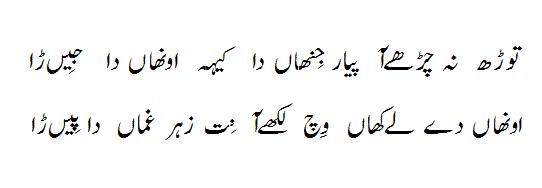
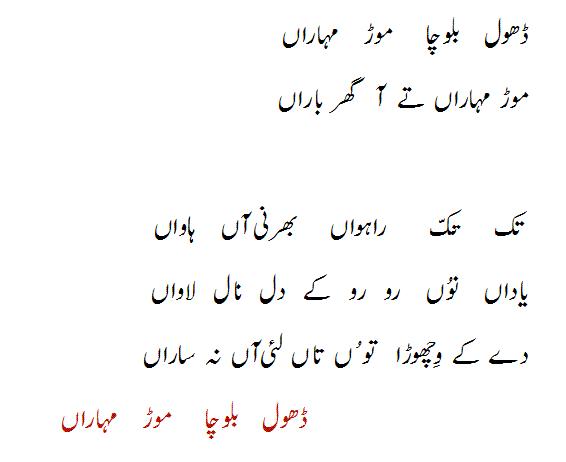
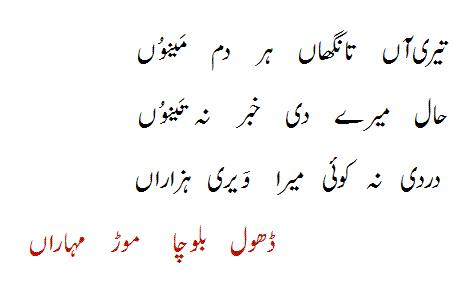
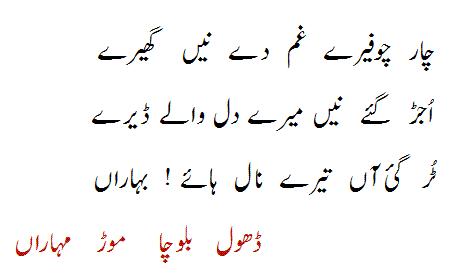
- Ahmad Rahi Dhole Balochaa Morr Mohaaraan Music: Wazir Afzal Film: Murad Baloch 1968
- Balochaa Haanriyaa Poet: Ahmed Rahi Music: Khursheed Anwar Singer: Irene Parveen
Balochaa Haanriyaa Poet: Ahmed Rahi:
What is the criterion for an immortal song? That it is sung by the people long after the poet who penned it has passed away.
I realized what an everlasting Punjabi song this was that Ahmed Rahi had written (for the Pakistani Punjabi movie Heer Ranjha) when I recently saw this being sung by women as they sat around a dholak in their living room at a Mehndee ceremony in Lahore. Ofcourse the musical composition by Khawaja Khursheed Anwar and the inclusion of musical notes played from a traditional Baloch lute adds immensely to its appeal... but the Punjabi lyrics seem to come directly from the heart of a young woman and catch us by the sleeve as we try to pull away ....

Dareechah-e-Nigaarish
Toronto, ON
Canada
talat